Back to Resource Library Download PDF
Playground Dance: Building Community Through Movement
 Download PDF
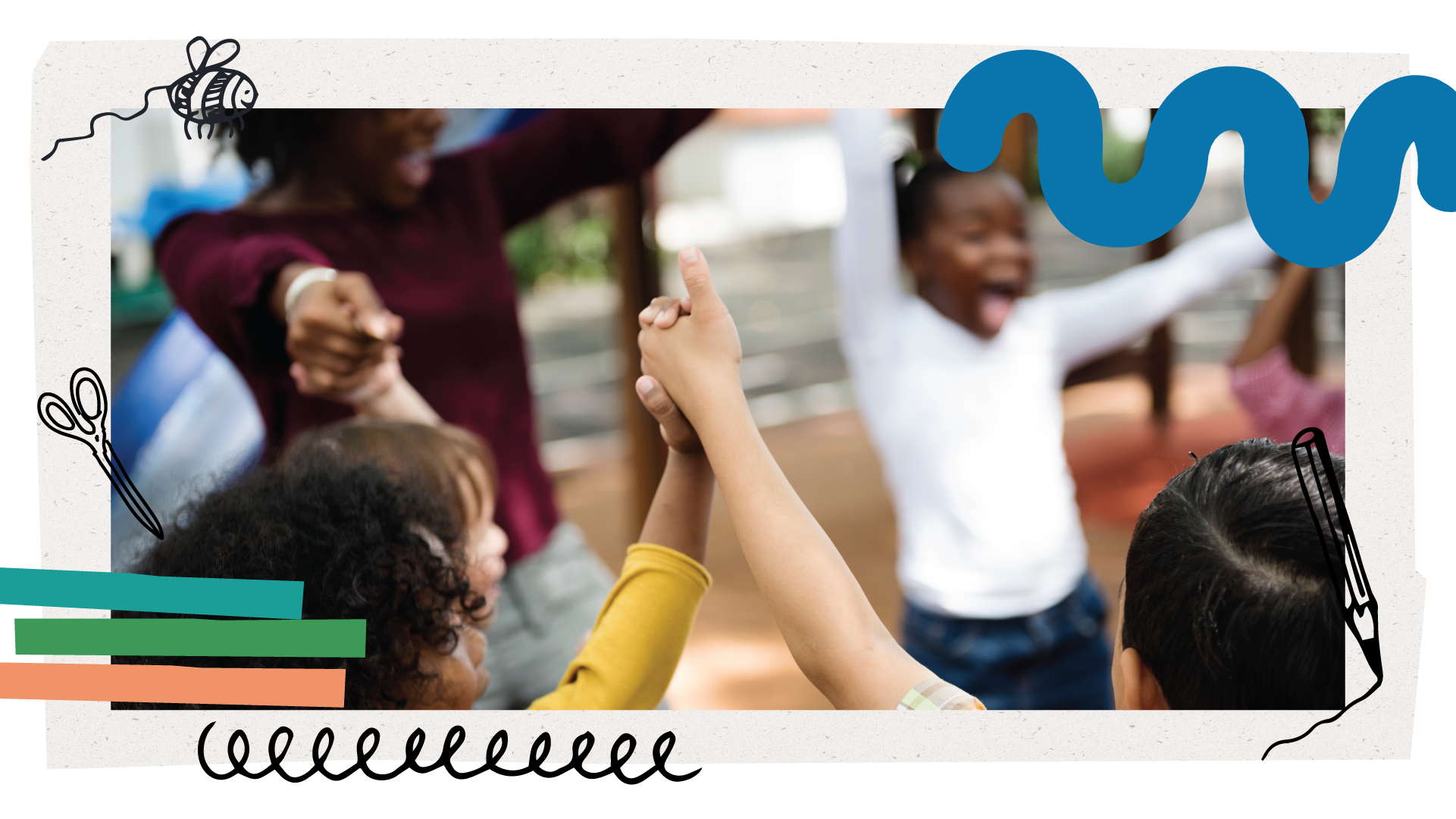
Use this community-building activity to explore how students can create their own language through movement and discover how the same instructions can lead to different interpretations!
Materials Needed: an open space for movement, music player (optional), video recording device (optional for sharing)
- Tell students that you’re going to explore playground dances and create new ones using simple movements from games, social dances and everyday play.
- To begin, build a movement vocabulary as a full group by asking students to call out simple, everyday movements such as a clap, step, head nod, shoulder shimmy, hip wiggle, stomp, etc. Write their responses on chart paper, inviting everyone to try them as you go.
- Next, ask students to level up their vocabulary by contributing moves from dances they know, like various versions of the running man, the woah or other popular social dances. Write each one down and practice each move a few times to get them in your bodies.
- Divide students into small groups and take time to verbally and physically review the list of moves you’ve generated as a full group.
- Still in small groups, invite students to create their own playground dance using any combination of those moves, in conjunction with other social dances. Remind them that they can decide how exaggerated or small their movements are, what direction they face, whether they move together or at different times, and how much rhythm or style they add. Give groups 10 – 15 minutes to create and rehearse their dances, repeating the sequence at least twice.
- Have each group share their playground dance for the class. After all performances, lead a discussion by stating, “We all started with the same instructions,” and then ask: What was different between the groups? How did each community interpret the dance in their own way? Highlight unique choices in style, energy or rhythm. Record the dances and create a compilation video to share on a class or school platform (with appropriate permissions, of course).
Reflection Questions:
- What surprised you about seeing different groups perform the same instructions?
- How did your group make choices about style, energy or rhythm? What influenced those decisions?
- How does this activity connect to the idea that communities have their own “language” through movement?
Words to Know:
A call-and-response is a pattern where one person (or group) makes a statement or movement and another person (or group) answers back, creating a rhythmic conversation.